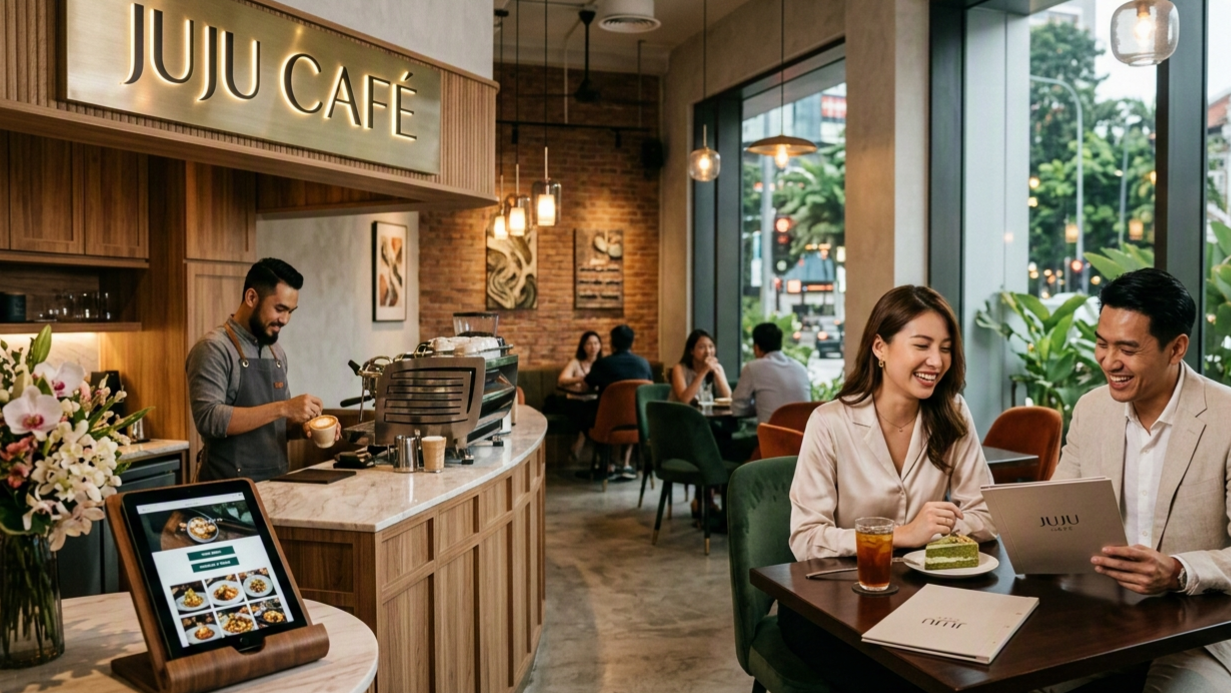
Walk into most Malaysian restaurants today and you'll find QR codes on every table, a Grab logo on the door, and an Instagram feed doing the heavy lifting for marketing. What's often missing is a website that actually works as hard as the food does. A social media page can showcase your dishes, but it can't take a reservation, process an order, or show up when someone Googles "restaurant near me" at 7pm on a Friday.
If you're building or refreshing your restaurant's website in 2026, here are the seven features that genuinely move the needle — not just nice-to-haves, but the things that turn browsers into diners.
1. Direct Online Ordering (Not Just a Grab Link)
Third-party delivery apps take a meaningful cut of every order — often 25–30%. A website with its own ordering system lets customers order directly from you, keeping more margin in your pocket while still giving them the convenience they expect. Even a simple "order for pickup" flow tied to WhatsApp or a lightweight checkout can meaningfully reduce your dependency on delivery platforms.
2. A Mobile-First Menu That Actually Loads Fast
Most diners are searching on their phones, often on mobile data, often while deciding where to eat right now. A menu buried in a slow PDF download is a lost customer. Your menu should be a proper web page — fast-loading, easy to scroll, with clear pricing and photos of your best-selling dishes, not a scanned image nobody can read.
3. Table Reservation or Booking Widget
Phone-only bookings mean missed calls during peak hours and no record of who's coming in. A simple booking form — even one that just confirms via WhatsApp — reduces friction for customers and gives your front-of-house team a clearer picture of the night ahead. For busier outlets, a real-time table booking system pays for itself quickly in reduced no-shows and better table turnover.
4. Google Maps Integration & Accurate Business Info
This sounds basic, but it's one of the most common gaps: outdated opening hours, a wrong phone number, or no embedded map. Malaysians frequently search "[restaurant name] near me" before deciding to go — if your address and hours aren't accurate and easy to find, you're sending customers to a competitor by default.
5. Real Photos, Not Stock Images
Food is visual, and Malaysian diners are used to scrolling gorgeous food photography on Instagram and TikTok. A website that leans on generic stock photos instantly feels less trustworthy. Investing in a proper photoshoot — even a modest one — for your signature dishes and restaurant interior does more for conversion than almost any other design decision.
6. SSL, Speed & Basic SEO Foundations
A secure (https) site that loads quickly isn't just good practice — Google actively ranks slow or insecure sites lower, and diners abandon pages that take more than a few seconds to load. Basic SEO — proper page titles, location keywords, and a Google Business Profile linked to your site — is what gets you found by people who don't already know your restaurant exists.
7. Clear Calls to Action on Every Page
Every page of your site should answer the question "what do I do next?" — whether that's "Order Now," "Book a Table," or "Get Directions." Restaurants often bury these actions at the bottom of the page or leave them out entirely, forcing visitors to hunt. Put your primary action front and center, above the fold, on every page.
Bringing It All Together
None of these features are individually complicated — the challenge is having them work together as one coherent system rather than a patchwork of plugins and third-party links. A well-built restaurant website in 2026 should feel like a natural extension of the dining experience: fast, visual, and built around getting someone from "hungry" to "ordering" in as few taps as possible.
If you're planning a new site or want to see where yours is falling short, get in touch with our team — or take a look at our food ordering solution built specifically for Malaysian F&B businesses.
Frequently Asked Questions
Do I really need a website if I already have Grab and Instagram?
Yes — those channels are great for discovery, but a website is the one place you fully control, with no commission fees and no algorithm deciding who sees it. It also builds credibility for customers checking you out before visiting.
How much does a restaurant website cost in Malaysia?
A basic menu-and-info site can start from a few thousand ringgit, while a full site with online ordering and booking typically costs more depending on the features and level of customisation required.
Can I add online ordering to an existing website?
In most cases, yes. Ordering functionality can often be layered onto an existing site without a full rebuild, depending on how the current site is built.