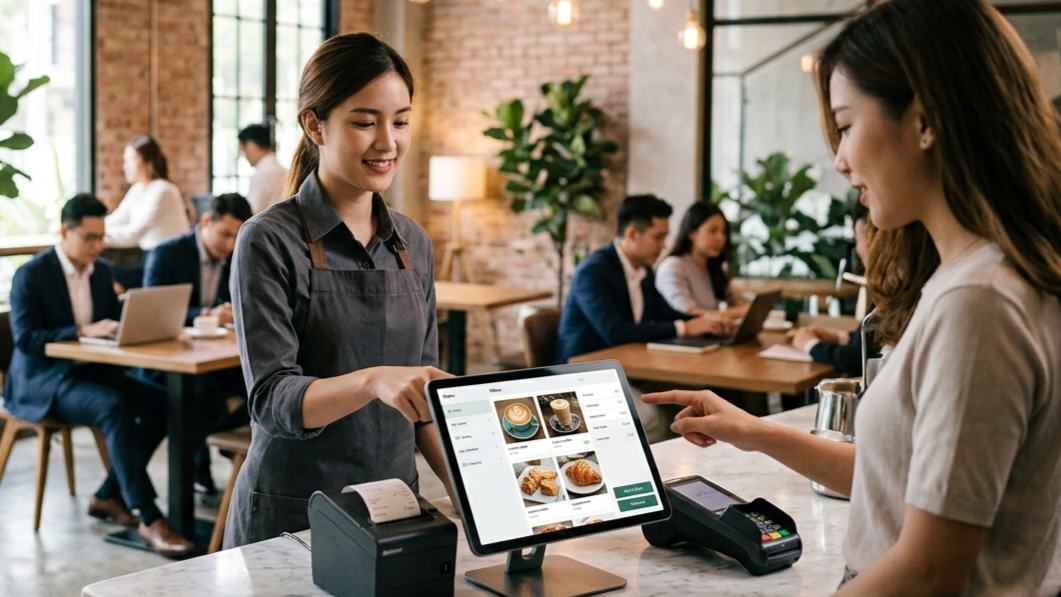
What Is a QR Code POS System?
A QR code POS (Point of Sale) system — sometimes called a QR POS — is a restaurant technology solution that lets diners browse a digital menu, place orders, and even pay, all by scanning a QR code at their table using any smartphone. No app download required, no paper menu to sanitise, and no standing in a queue at the counter.
At its core, a QR POS merges two technologies: a traditional point-of-sale backend that tracks orders, inventory, and payments, and a QR-code delivery layer that pushes that information directly to the customer's phone browser.
These systems are popular worldwide, but adoption in Malaysia — especially in urban and semi-urban areas like Selangor — has accelerated dramatically since 2022, pushed by shifting customer expectations and a persistent labour shortage in the F&B sector.
Why Selangor F&B Businesses Are Changing Their Approach
Selangor is Malaysia's most industrialised and densely populated state, home to thriving food courts in Shah Alam, upscale cafés in Petaling Jaya, and everything in between. Competition is fierce, and diners — many of them young, mobile-first consumers — increasingly expect the same digital convenience they get from food delivery apps when they dine in.
Several pressures are driving restaurant owners toward a modern restaurant ordering system in Selangor:
- Rising labour costs. Minimum wage increases mean every unnecessary staff touchpoint now has a real dollar cost. A QR ordering system lets one server manage twice the tables.
- Staff shortages. Finding reliable front-of-house staff remains difficult. Automating order-taking reduces dependency on headcount without sacrificing service quality.
- Customer impatience. Selangor's lunchtime crowds move fast. Long wait times at the counter or for a server to take an order translates directly into lost sales and poor reviews.
- Data and insights. Traditional paper-based or legacy POS systems give you little usable data. Modern systems surface bestsellers, peak hours, and upsell opportunities automatically.
Key Features to Look For in a Restaurant Ordering System
Not all QR POS systems are created equal. When evaluating a point of sale QR code solution for your Selangor restaurant, look for these capabilities:
Instant QR Menu Access
Customers scan once and see a live, image-rich menu — no app, no account, no friction.
Real-Time Kitchen Display
Orders flow straight to the kitchen display or printer the moment the customer confirms — zero relay delay.
Integrated Payments
Support for DuitNow QR, Touch 'n Go eWallet, credit/debit cards, and cash — all reconciled in one report.
Sales Analytics Dashboard
Track revenue, item popularity, and table turnover in real time from any device, anywhere.
Smart Upsell Prompts
Suggest add-ons or combos at the right moment to increase average order value without pushy staff scripts.
Menu & Inventory Control
86 an item in seconds when you run out — the menu updates instantly across every table's QR code.
Multilingual support (Bahasa Malaysia, English, and Mandarin, at minimum) is also important for Selangor's diverse dining demographic.
How a QR POS System Works, Step by Step
Understanding the end-to-end flow helps you explain the system to your staff and anticipate any hiccups before launch.
- QR codes are generated per table — or per ordering station — and printed on table tents, stickers, or integrated directly into your table surface.
- The diner scans the QR code with their phone camera. No app download is required; the digital menu opens in their browser within seconds.
- They browse, customise, and place the order. Special requests, spice levels, portion sizes — all captured digitally, eliminating miscommunication.
- The order fires immediately to the kitchen display system (KDS) or receipt printer. The system also logs the order against the table number.
- Staff focus on delivery and services, not order-taking. They bring dishes to the table when prompted by the system.
- Customers request the bill via the same interface, choose their payment method, and pay — the POS closes the table and is ready for the next guest.
Real Benefits for Selangor Restaurant Owners
Here is what F&B operators typically see after deploying a QR code restaurant ordering system:
📈 Higher Average Spend Per Table
Digital menus with photos and smart upsell prompts consistently lift average order values. Customers spend more when they can browse at their own pace without feeling rushed by a server standing over them.
⚡ Faster Table Turnover
Fewer bottlenecks — from order-taking to bill settlement — mean tables clear faster. During peak lunch hours in high-footfall areas like Subang Jaya or Klang, even shaving 10 minutes off average table time can meaningfully increase daily covers.
💼 Reduced Labour Dependency
You do not need to eliminate staff — you need fewer of them doing low-value tasks. Freed-up servers become runners, hosts, or brand ambassadors, dramatically improving the quality of interaction they do have with guests.
✅ Fewer Order Errors
When the customer types their own order, miscommunication between front-of-house and kitchen drops to near zero. Fewer remakes mean less food waste and less frustration on both sides of the pass.
📊 Actionable Business Data
Legacy POS systems give you sales totals. A modern restaurant ordering system tells you which items drive the most margin, which tables are slowest, and when your busiest hour actually starts — so you can schedule and price intelligently.
Choosing the Right Restaurant Ordering System for Your Business
With dozens of options on the market, narrowing the field can feel overwhelming. Here are the questions that matter most:
- Is it cloud-based? Cloud systems mean you can manage menus, check sales, and update pricing from your phone anywhere. On-premise solutions lock you to a physical terminal.
- What are the upfront and recurring costs? Some vendors charge large hardware fees upfront; others use a monthly SaaS model. Calculate total cost of ownership over 24 months, not just setup cost.
- How is local payment handled? Ensure the system integrates natively with Malaysian payment rails — DuitNow, Boost, GrabPay, and the major bank cards.
- What is the onboarding and support like? A QR POS that goes down on a Saturday night with no local support is a nightmare. Choose a vendor with responsive local support — ideally based in Malaysia.
- Is the menu builder easy to use? You should be able to update prices, add specials, and 86 items yourself in under two minutes, without calling a developer.
- Does it scale? If you plan to open a second outlet in Puchong or a third in Rawang, your system should support multi-location management from day one.
How ROVA Helps Selangor F&B Businesses Modernise
ROVA is a Selangor-based technology company building digital tools specifically for Malaysian F&B operators. Our food ordering platform is designed from the ground up for the local market — from Bahasa Malaysia menu support to DuitNow payment integration.
Here is what sets our restaurant ordering system apart:
- No-app QR ordering — customers scan and order instantly in their browser. Zero friction, maximum adoption.
- Real-time kitchen sync — orders appear on your KDS or printer in seconds, keeping your kitchen in flow even during the lunch rush.
- One dashboard for everything — menus, orders, payments, and analytics all in one clean interface accessible from any device.
- Local payment support — DuitNow QR, Touch 'n Go eWallet, credit cards, and cash, reconciled automatically at end of day.
- Dedicated local support — our team is in Malaysia, speaks your language, and is reachable when it actually matters.
Whether you run a kopitiam in Klang, a casual dining outlet in Shah Alam, or a multi-outlet chain across Selangor, ROVA scales with you.
Ready to modernise your restaurant?
Get a live demo of ROVA's QR ordering system — no commitment, no sales pressure. Just see what it looks like in your restaurant.
Book a Free DemoFrequently Asked Questions
What does "POS QR" mean?
POS QR simply refers to a point-of-sale system that uses QR codes as the primary interface. Instead of a physical cashier terminal or handheld device, your customers use their phone camera to scan a code and interact with your ordering system directly.
Do my customers need to download an app?
No. Modern QR POS systems — including ROVA's — open directly in the phone's web browser after a scan. There is no app to install, no account to create, and no barrier between your customer and the menu.
Is a QR code POS system suitable for a small kopitiam or hawker stall?
Absolutely. QR ordering systems scale down just as well as they scale up. A single-stall hawker can use a basic setup with one QR code per table and a tablet in the kitchen — affordable and highly effective during rush periods.
How long does it take to set up a restaurant ordering system?
With ROVA, most restaurants go live within one to three business days. Menu uploading is the longest step — but our team helps you with that. QR code stickers can be on your tables the same week you sign up.
What happens if a customer doesn't want to use the QR code?
Staff can still take orders manually and input them into the system — nothing forces a 100% self-service model. The QR system is an addition, not a replacement for human service.
Is my data safe with a cloud POS?
Reputable cloud POS providers encrypt data in transit and at rest, and are far more secure than most on-premise systems that go unpatched for years. Always confirm that your vendor complies with PDPA (Malaysia's Personal Data Protection Act).
The Bottom Line
The F&B landscape in Selangor is shifting fast. Diners expect speed, convenience, and a seamless digital experience — and restaurants that deliver it win loyal regulars. A modern restaurant ordering system with QR code POS technology is no longer a luxury reserved for large chains. It is the practical, affordable infrastructure any Selangor restaurant owner can deploy to work smarter, serve more tables, and build a sustainable business.
If you are ready to explore what that looks like for your outlet, reach out to ROVA for a no-obligation conversation.