Restaurant Ops
QR Menu for Food Courts: Managing Multiple Stalls Under One System
A QR menu food court system in Malaysia has to do something a single-vendor restaurant never worries about: let a dozen independent stalls run their own menus while customers order everything from one table, one scan, one bill.
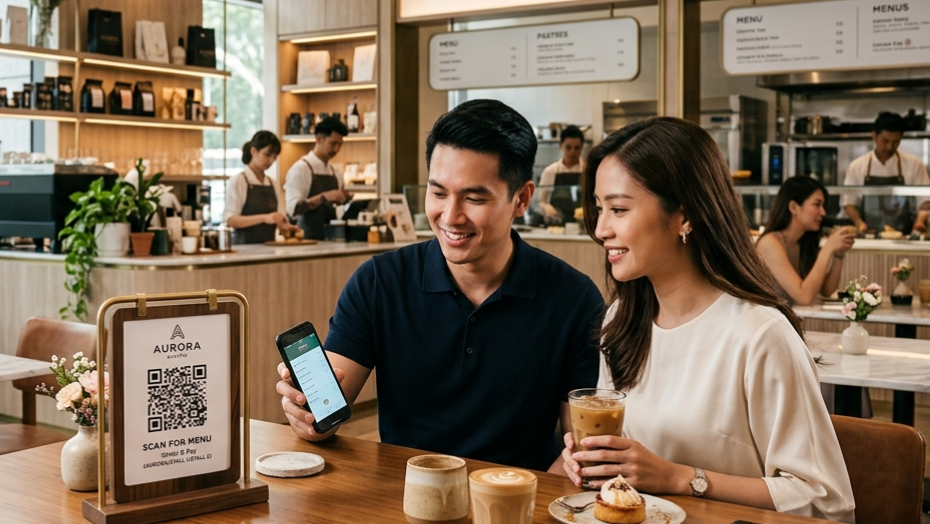
Malaysia's food courts and hawker-style centres run on a model that's unlike almost any other dining format: one shared seating area, one set of customers, but a dozen or more independently run stalls each with their own menu, pricing, and kitchen. That structure makes ordering genuinely harder than it is in a normal restaurant — and it's exactly why a one-size-fits-all QR menu rarely works for a food court without some rethinking.
Done right, though, a QR menu food court system turns that complexity into a smoother experience for everyone. Customers order from every stall without leaving their seat. Stall owners keep full control of what they sell. And the operator gets one clean view of everything happening across the court. Here's how it actually works.
Why food courts need a different kind of QR menu
A QR menu built for a single restaurant assumes one kitchen, one menu, and one bill. A food court breaks all three assumptions at once. Customers might order char kway teow from one stall, a drink from another, and dessert from a third — all from the same table, all in one sitting. If each stall has its own QR code and its own separate ordering flow, customers end up scanning multiple codes, juggling multiple carts, and paying multiple times. That friction is exactly what drives people back to queueing at the counter instead.
The fix isn't a QR code per stall — it's one QR code per table that opens a single, unified menu covering every participating stall in the food court.
1. One scan, every stall's menu
With a multi-stall system, a customer scans a single QR code at their table and sees a combined menu organized by stall — noodle stall, drinks stall, dessert stall, all in one scrollable list. They can add items from three different stalls into the same cart and check out once. This is the single biggest difference between a true food court QR menu and simply giving every vendor their own ordering link.
2. Orders routed automatically to the right kitchen
Behind that single menu, the system needs to split a combined order back into individual tickets for each stall's kitchen. When a customer orders from three stalls in one go, each stall should only see the items that belong to them, with the table number attached so everything eventually reaches the same spot. Done well, this is invisible to the customer and effortless for stall staff — no manual sorting, no shouting table numbers across the court.
3. Each stall keeps control of its own menu
Independent stall owners are protective of their menus and pricing for good reason — it's their business, not the food court operator's. A workable system gives each vendor their own simple dashboard to add items, update prices, mark things sold out, or take a dish off the menu entirely, without needing to ask the food court operator or wait on a shared update cycle. The customer-facing menu still looks unified, but the backend is fully decentralized.
4. Centralized payment, simple settlement
Customers pay once for everything in their order, regardless of how many stalls they bought from. The system then needs to settle that single payment back out to each stall based on what they sold — typically through a daily or weekly reconciliation report rather than splitting cash on the spot. This is often the part operators underestimate: getting the customer experience right is one thing, but stall owners need to trust that they'll be paid accurately and on time for what they sold.
5. Handling lunchtime rush across dozens of stalls
Malaysian food courts see brutal peaks — lunchtime crowds that arrive all at once and expect food quickly. A QR menu system helps here simply by removing the queue: people order from their seats instead of lining up at each stall's counter, which spreads demand more evenly across the kitchen rather than creating visible bottlenecks at the busiest stalls. Some operators also use order data from peak periods to help individual stalls anticipate demand and prep ahead for their busiest items.
A shared system, independent stalls
The appeal of a QR menu food court setup isn't just speed — it's that it lets a genuinely complex business model run smoothly. Dozens of independent vendors can operate under one roof, set their own menus, and still give customers a single, simple way to order from all of them at once. For operators managing a food court in Malaysia, that combination of unified ordering with decentralized stall control is usually the difference between a system stalls actually adopt and one they quietly resist.
Frequently asked questions
How does a QR menu work in a food court with many stalls?
Customers scan one QR code at their table and see a combined menu covering every stall in the food court. Orders are automatically routed to the right stall's kitchen, and the system tracks payment centrally even though each stall manages its own menu and pricing.
Can each stall in a food court manage its own menu separately?
Yes. A multi-stall QR menu system gives each vendor their own dashboard to update items, prices, and availability, while customers still browse and order everything from a single shared menu interface.
Is QR ordering common in Malaysian food courts?
QR ordering has grown quickly across Malaysian food courts and hawker centres as operators look for ways to handle high lunchtime volume, split orders across multiple stalls, and reduce queueing without adding more counter staff.
Bring every stall in your food court onto one system
See how ROVA lets each stall manage its own menu while customers order from a single QR code at the table.
Get Started