QR Code Menu vs Printed Menu: Pros and Cons for F&B Owners
Should your restaurant ditch the laminated menu and go fully digital — or is print still worth the investment? Here's an honest, practical breakdown to help Malaysian F&B owners make the right call.
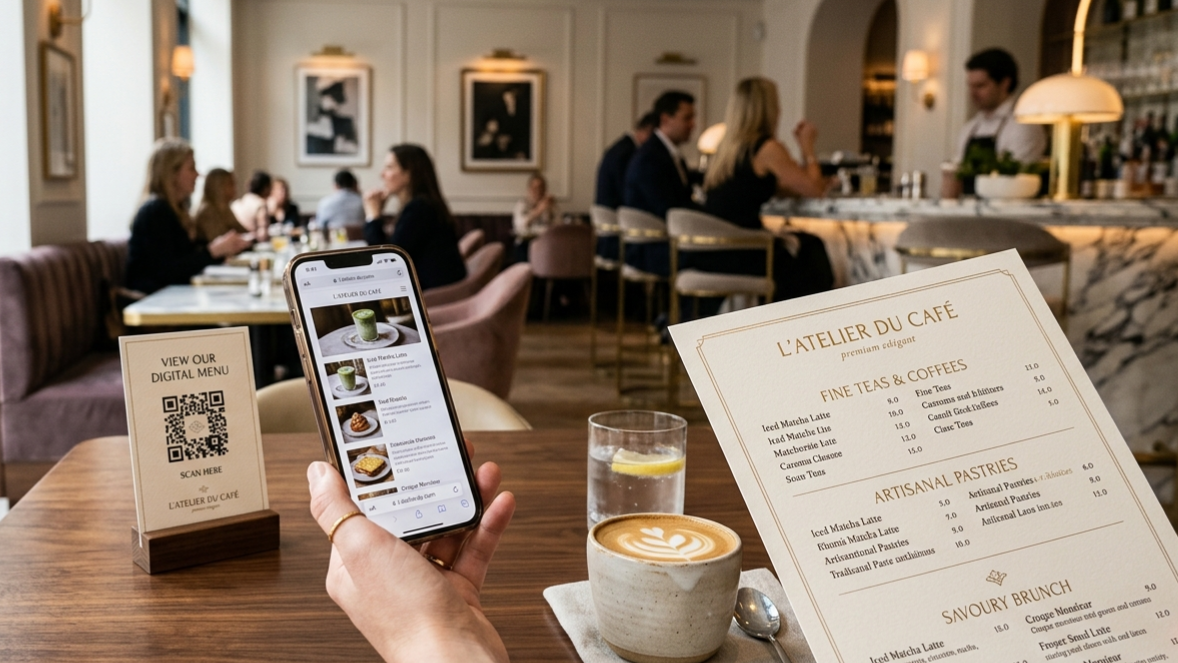
Walk into almost any restaurant in Kuala Lumpur or Penang today and you will find a small QR code sticker on the table. Scan it, and the full menu appears on your phone. Yet plenty of diners still reach for a physical menu — and plenty of restaurant owners still print thousands of them every year. So which is actually better for your business?
The answer is not as straightforward as "go digital." The best choice depends on your restaurant's concept, customer profile, price point, and how often your menu changes. This guide breaks down the real pros and cons of QR code menus vs printed menus so you can make an informed decision — or find the right hybrid approach.
What this guide covers: We compare QR code menus and printed menus across seven key dimensions: cost, menu flexibility, customer experience, hygiene, branding, accessibility, and data insights. A side-by-side comparison table is included.
What Exactly Is a QR Code Menu?
A QR code menu is a digital version of your menu hosted online — typically as a webpage or PDF — that customers access by scanning a QR code with their smartphone camera. The QR code itself is usually printed on a table tent, sticker, or coaster. Some systems go further, allowing customers to browse, customise, and place orders directly from their phone without involving a waiter.
There are two main types of QR code menus in use across Malaysian restaurants today:
View-Only Digital Menu
The QR code opens a PDF or webpage showing the menu. Customers still order through a waiter. This is the most common setup in Malaysia and the cheapest to implement.
Ordering-Enabled QR Menu
The QR code opens a full ordering system where customers select items, customise orders, and submit — reducing the need for wait staff at the table. ROVA's food ordering platform works this way.
Pros of QR Code Menus
1. Dramatically Lower Running Costs
Printing is expensive. A single set of laminated A3 menus for a 20-table restaurant can easily cost RM500–RM1,500. If your menu changes seasonally or even monthly, those costs multiply fast. A QR code menu eliminates reprinting costs almost entirely — updating a dish's price or swapping a photo takes minutes and costs nothing.
2. Update Your Menu in Real Time
Sold out of ayam percik tonight? Mark it as unavailable instantly. Running a weekend promotion? Add it to the digital menu in seconds. Printed menus force you to either reprint (expensive) or use awkward handwritten stickers (unprofessional). QR menus give you full control at any time, from any device.
3. Richer Visual Experience
A well-designed digital menu can include high-resolution photos of every dish, videos, allergen information, and even customer reviews — all without adding bulk or cost. Research consistently shows that menus with food photography drive higher average order values. That's much harder to achieve affordably with print.
4. More Hygienic
Physical menus pass through dozens of hands every day. Post-pandemic, many diners remain conscious of this. QR code menus are inherently touchless — customers use their own device, reducing cross-contamination risk and reassuring health-conscious guests.
5. Valuable Data and Analytics
With an ordering-enabled QR menu system, you gain access to data that a printed menu can never provide: which items are viewed most, which are ordered least, peak ordering times, average order value by table, and more. This intelligence helps you make smarter decisions about pricing, promotions, and menu engineering.
ROVA Insight: Restaurants using ROVA's QR ordering system report an average 15–22% increase in order value, driven by prominent upsell suggestions and high-quality dish photography shown at the moment of decision.
6. Supports Multiple Languages Easily
Malaysia's diverse diner base — Malay, Chinese, Tamil, and English speakers, plus a large tourist population — makes multilingual menus valuable. A digital menu can offer language switching with a single tap. Printing the same menu in four languages is four times the cost.
Cons of QR Code Menus
1. Requires a Smartphone and Internet Connection
Not every diner has a smartphone — elderly customers and young children in particular may struggle. If your venue's WiFi is patchy or slow, the experience suffers. A QR menu that takes ten seconds to load frustrates customers more than a laminated card ever would.
2. Can Feel Impersonal at Higher-End Venues
Fine dining and premium restaurants invest heavily in tactile brand experiences — thick card stock, embossed logos, curated typography. A QR code on a luxury table can feel jarring. For establishments where ambience and service theatre are core to the proposition, a physical menu carries weight that a phone screen cannot replicate.
3. Customers May Not Be Accustomed to It
While QR adoption accelerated sharply after 2020, some demographic groups — particularly older diners in suburban or rural areas — still prefer being handed a menu. Dismissing this preference risks leaving guests feeling unwelcome or confused.
4. Screen Fatigue
After hours in front of screens at work, some diners actively enjoy the break from digital devices that a restaurant visit provides. Being asked to browse a menu on their phone — which also has WhatsApp notifications waiting — may diminish the dining experience for this segment.
Pros of Printed Menus
1. No Technology Barrier
A printed menu works for every customer, regardless of phone model, battery level, or digital literacy. There is zero friction between sitting down and starting to browse. This universal accessibility remains a genuine advantage for certain restaurant types and demographics.
2. Elevates the Dining Experience at Premium Venues
A beautifully designed printed menu — with thoughtful typography, quality paper stock, and a coherent visual identity — signals that a restaurant takes its brand seriously. In upscale settings, handing a guest a menu is part of the service ritual. It sets the tone before the first course arrives.
3. No Dependence on WiFi or Power
If your internet goes down at 8pm on a Saturday, your QR menu goes with it. A printed menu never has an outage. For venues in areas with inconsistent connectivity, physical menus are a reliable fallback.
4. Easier to Browse Without Scrolling
A large-format printed menu lets diners see multiple sections at once — starters, mains, drinks — without scrolling or tapping. Some customers find this overview more intuitive for making decisions, especially when dining in a group and comparing options.
Cons of Printed Menus
1. High Ongoing Costs
Beyond the initial design and print run, menus wear out, get damaged, go missing, and become outdated. Reprinting is a recurring cost that compounds over time. For restaurants with seasonal or frequently changing menus, this cost can be substantial.
2. Difficult to Keep Current
A printed menu is a snapshot in time. The moment you change a price, add a new dish, or need to mark something as unavailable, your printed menus become partially incorrect. Crossed-out items and handwritten additions look unprofessional and erode trust.
3. Environmental Impact
Paper menus contribute to waste, particularly when they are laminated (which makes them non-recyclable) or replaced frequently. As sustainability becomes an increasingly important consideration for Malaysian diners — especially younger urban consumers — the environmental footprint of printed menus is a legitimate brand consideration.
4. No Data or Insights
A printed menu tells you nothing about customer behaviour. You cannot know which sections customers linger on, which items they skip, or what combinations they consider before ordering. This data gap limits your ability to optimise the menu strategically.
Side-by-Side Comparison
Here is a quick-reference summary across the dimensions that matter most for F&B operations in Malaysia.
| Factor | Printed Menu | QR Code Menu |
|---|---|---|
| Upfront Cost | ~ Moderate (design + print) | ✓ Low (free to minimal) |
| Ongoing Cost | ✗ Recurring reprint costs | ✓ Very low |
| Menu Updates | ✗ Requires full reprint | ✓ Instant, no cost |
| Food Photography | ~ Expensive to include | ✓ Unlimited, high-res |
| Hygiene | ✗ Multiple hands daily | ✓ Touchless |
| Accessibility (elderly) | ✓ Universal | ✗ May struggle |
| Premium / Fine Dining | ✓ Elevates experience | ~ Feels impersonal |
| Analytics & Data | ✗ None | ✓ Rich behavioural data |
| Multilingual Support | ✗ Costly to print multiple | ✓ Easy toggle |
| WiFi Dependency | ✓ Zero dependency | ✗ Requires connectivity |
| Environmental Impact | ✗ Paper & laminate waste | ✓ Minimal waste |
| Upselling Capability | ~ Static layout only | ✓ Dynamic suggestions |
Which Is Right for Your Restaurant?
Rather than a blanket recommendation, the right answer depends on the type of F&B operation you run. Here is a practical guide by restaurant category:
Casual Dining & Cafés
QR code menus are an excellent fit. Your customer base is comfortable with smartphones, menu updates are frequent, and the cost savings are meaningful. Consider an ordering-enabled system to reduce wait times.
Fine Dining & Premium Restaurants
A high-quality printed menu remains part of the experience. That said, a supplementary QR code for wine lists or daily specials can reduce printing costs while preserving the physical menu's prestige.
Hawker Stalls & Food Courts
QR menus work well — they are cheap, hygienic, and can display vivid dish photography that increases orders. Ensure your WiFi coverage is solid across the seating area.
High-Volume Quick Service
An ordering-enabled QR menu shines here. Reducing the number of orders taken by staff directly addresses your biggest bottleneck: throughput speed during peak hours.
The Hybrid Approach: Best of Both Worlds
Many of the most operationally savvy Malaysian restaurants are not choosing one or the other — they are running both in parallel. A hybrid approach typically looks like this:
- QR codes on every table as the primary menu, linked to a well-designed digital menu with food photography.
- A small number of printed menus (5–10% of table count) kept at the host station for guests who request them.
- A printed beverages and desserts card left on each table as a tactile upsell tool, while mains are handled digitally.
This approach minimises printing costs, keeps the experience inclusive for all guests, and lets you update the main menu digitally without touching the physical collateral. It is our recommended starting point for most casual and mid-market F&B operators.
Practical tip for Malaysian operators: If you are transitioning from printed to QR menus, add a small table tent that explains how to scan — not all diners will do it instinctively. A friendly instruction card reduces friction and prevents guests from feeling confused or unwelcome.
How to Get Started with a QR Code Menu
If you have decided to try a QR menu, here is a straightforward path to getting live quickly:
Audit Your Menu
Consolidate your current menu into a clean, structured list. Categorise items clearly and decide which dishes need photography.
Photograph Key Dishes
You do not need to photograph everything. Start with your top 10–15 bestsellers. Good natural light and a smartphone camera are sufficient to begin.
Choose a Platform
Select a QR menu system that fits your needs. For view-only, there are free tools. For ordering-enabled systems with analytics and ordering flow, consider a dedicated platform like ROVA.
Generate and Place Your QR Codes
Print table-specific QR codes on durable stickers or table tents. Place them at eye level on each table. Test every code before opening day.
Brief Your Team
Make sure staff can confidently assist guests who have trouble scanning, and that they know how to update the menu when items sell out.
QR Menu Adoption in Malaysia: By the Numbers
Understanding the wider landscape helps contextualise the decision for your own business.
Frequently Asked Questions
It depends on your restaurant's concept and customer profile. QR code menus are better for frequent menu changes, cost savings, and hygiene. Printed menus are better for upscale dining experiences and customers who prefer a physical menu. Many F&B owners find a hybrid approach works best.
A basic QR code menu can cost as little as RM0 using free tools, while more advanced systems with ordering and analytics features typically range from RM50 to RM300+ per month. The savings come from eliminating recurring printing costs, which often makes paid systems pay for themselves within months.
Yes. QR code menu adoption accelerated significantly after the pandemic, and most diners — especially those under 45 — are comfortable scanning a QR code. Casual dining and hawker-style restaurants see particularly high acceptance rates. Providing a few printed menus on request ensures no guest is left behind.
Absolutely. A hybrid approach — QR codes on every table with a small number of printed menus available on request — is one of the most popular strategies among Malaysian F&B operators. It satisfies all customer preferences while keeping costs low.
Keeping a few printed menus on hand for customers without smartphones or those uncomfortable with QR codes ensures no guest is left behind. Staff can also assist by showing the menu on a tablet. This is why a hybrid approach is strongly recommended.
Ready to Launch Your QR Ordering Menu?
ROVA's food ordering system gives your restaurant a beautiful QR menu with real-time ordering, dish photography, and the analytics to keep growing — without the reprint bills.
Talk to the ROVA Team