The Real Cost of a Traditional POS vs a Modern Tablet POS
The sticker price is only the beginning. Here is a full, honest POS system cost comparison for Malaysian F&B owners — covering hardware, software, maintenance, hidden fees, and the 3-year total you actually need to budget for.
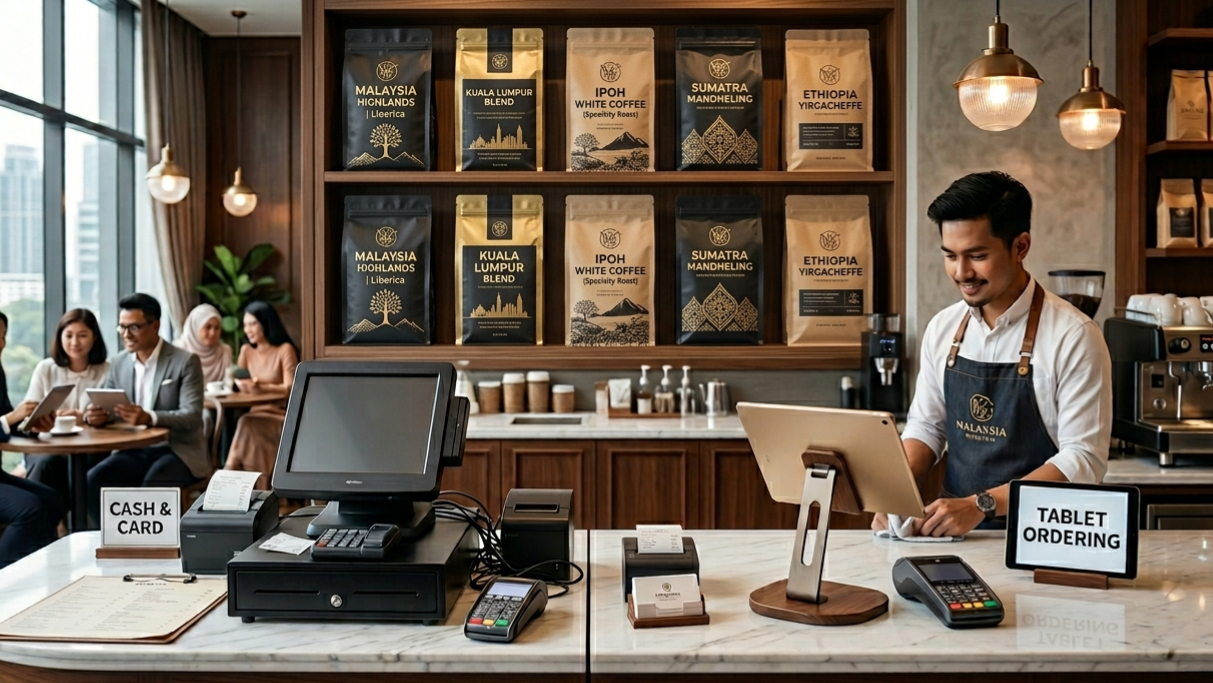
When a Malaysian restaurant owner starts looking at POS systems, the conversation almost always starts the same way: "How much does it cost?" And the first number they hear — whether from a sales rep or an online listing — is almost never the real number.
Traditional POS vendors quote hardware bundles. Tablet POS vendors quote monthly subscriptions. Neither figure tells you what you will actually spend over one, two, or three years. This guide changes that. We break down the complete POS system cost comparison for Malaysia — every line item, no fluff — so you can make a fully informed decision before signing anything.
What this guide covers: Upfront hardware costs, software licensing, annual maintenance contracts, hidden fees, a real 3-year cost comparison, and a feature-by-feature table to help you choose the right system for your F&B operation.
What Is a Traditional POS System?
A traditional POS system — sometimes called a legacy POS or on-premise POS — is built around a dedicated hardware terminal, typically a ruggedised touchscreen tower or all-in-one unit running a proprietary operating system. The software lives locally on the device, data is stored on a local server or hard drive, and updates are pushed manually by a technician.
In Malaysia, well-known traditional POS brands include systems like Agilysys, Aldelo, and locally developed solutions sold by resellers. These systems are common in established restaurants, hotels, and franchise chains — places that set up their infrastructure several years ago and have not yet made the switch.
Key distinction: Traditional POS systems are sold as capital expenditure — you buy the hardware and licence outright. Modern tablet POS systems are sold as operating expenditure — you pay a lower monthly subscription and use off-the-shelf hardware like an iPad or Android tablet.
What Is a Modern Tablet POS System?
A modern tablet POS system runs on a standard consumer tablet (iPad, Samsung, or similar Android device) connected to compact peripherals — a receipt printer, card reader, and optional cash drawer. The software is cloud-based, meaning data syncs in real time to the cloud, updates happen automatically, and you can access your dashboard from any browser.
Examples common in Malaysia include systems like StoreHub, Slurp!, and ROVA. These platforms charge a monthly or annual software subscription and allow owners to purchase compatible hardware separately or as a bundle.
Traditional POS: Full Cost Breakdown
Here is what you actually pay when setting up a traditional POS system for a single-terminal restaurant in Malaysia. These are real market ranges based on quotes from local resellers in 2025–2026.
Traditional POS — Single Terminal
And that is only year one. The recurring costs are where the real pain begins:
Traditional POS — Annual Recurring Costs
Watch out: Many traditional POS vendors in Malaysia do not include software updates in the base maintenance contract. Major version upgrades — which may be required to support new e-invoice formats under LHDN's e-Invoice mandate — often carry an additional upgrade fee of RM500 to RM2,000.
Tablet POS: Full Cost Breakdown
Here is the equivalent breakdown for a modern cloud-based tablet POS system — single terminal, suitable for a café or casual dining restaurant.
Tablet POS — Single Terminal
Tablet POS — Annual Recurring Costs
Note that on the tablet POS side, software updates, new features, cloud backups, and often customer support are included in the monthly subscription at no extra charge. There are no technician callout fees for software issues — most are resolved remotely or via live chat.
The 3-Year Total: Where the Numbers Really Diverge
Most F&B owners focus on the upfront cost. But a POS system is a multi-year commitment — and it is the 3-year total that tells the real story. Here is what a single-terminal setup looks like over 36 months, using mid-range estimates for both systems.
Traditional POS — 3 Years
Tablet POS — 3 Years
For multi-outlet operators: The gap widens dramatically at scale. A 3-terminal traditional POS setup can easily exceed RM60,000 in the first year alone. Tablet POS systems charge per location or per terminal — and cloud-based multi-outlet management is usually included in the subscription, not an expensive add-on.
Hidden Costs Most Vendors Won't Tell You About
Beyond the line items above, traditional POS systems carry a set of costs that rarely appear in the sales conversation — but show up reliably on your P&L over time.
Vendor Lock-In & Data Migration
Traditional POS vendors store your sales data in proprietary formats. When you want to switch systems, extracting and migrating your historical data can cost RM500 to RM2,000 — and some vendors make it deliberately difficult to leave.
Hardware Obsolescence
Proprietary POS terminals have a hardware lifespan of 5–7 years. When the hardware fails or becomes unsupported, you often cannot simply replace the unit — you may need to buy an entirely new system because the new hardware is incompatible with the old software version.
e-Invoice Compliance Costs
Malaysia's LHDN e-Invoice mandate is being rolled out in phases. Many traditional POS systems require a paid upgrade or custom integration to comply — costs that were not part of the original purchase agreement.
Downtime & Lost Revenue
When a traditional POS terminal breaks down, you wait for a technician — often 24 to 48 hours. During a busy weekend, a non-functional POS can mean thousands of ringgit in lost orders and frustrated customers. Tablet POS systems can be replaced with a spare consumer tablet within hours.
Staff Retraining After Upgrades
Major version upgrades to traditional POS software often change the interface significantly. Retraining staff — particularly in high-turnover F&B environments — carries a real cost in time, errors, and slowed service during the adjustment period.
Feature Comparison: What You Actually Get
Cost alone does not tell the whole story. Here is how the two systems compare on the features that matter most to Malaysian F&B operators day-to-day.
| Feature | Traditional POS | Tablet POS |
|---|---|---|
| Upfront Cost | ✗ High (RM8,900–RM21,600) | ✓ Low (RM1,950–RM4,500) |
| 3-Year Total Cost | ✗ ~RM27,900 | ✓ ~RM11,300 |
| Software Updates | ✗ Paid, manual | ✓ Automatic, included |
| Cloud Access & Remote Dashboard | ✗ Rarely available | ✓ Included |
| Multi-Outlet Management | ~ Expensive add-on | ✓ Built-in |
| Real-Time Sales Reporting | ~ Limited / end-of-day | ✓ Live dashboard |
| Hardware Replacement | ✗ Proprietary, 24–48hr wait | ✓ Any tablet, same day |
| e-Invoice Compliance (LHDN) | ~ Requires paid upgrade | ✓ Cloud-updated automatically |
| QR Code Ordering Integration | ✗ Not supported | ✓ Native integration |
| Inventory Management | ~ Basic | ✓ Real-time tracking |
| Customer Support | ~ On-site technician (paid) | ✓ Remote / live chat (included) |
| Offline Mode | ✓ Fully local | ✓ Offline mode available |
| Vendor Lock-In Risk | ✗ High | ✓ Low (standard hardware) |
When a Traditional POS Still Makes Sense
In the interest of balance — because the numbers above strongly favour tablet POS systems — there are genuine scenarios where a traditional POS is the right call.
Large Hotels & Banquet Operations
High-volume venues with complex room charge integrations, split billing requirements, and dedicated IT staff may benefit from the raw processing power and deep customisation of enterprise-grade traditional POS systems.
Heavily Regulated Environments
Some casino F&B, airport, or government-contracted operations have strict data sovereignty requirements that mandate on-premise data storage — making cloud-based tablet POS unsuitable by policy, not by preference.
For the vast majority of Malaysian F&B operators — independent cafés, casual dining restaurants, hawker chains, ghost kitchens, and growing multi-outlet brands — these exceptions do not apply. A modern tablet POS delivers more functionality at significantly lower cost.
Switching from Traditional to Tablet POS: What to Expect
If you are currently on a traditional POS and considering the switch, here is a realistic picture of what the transition involves:
Export Your Menu & Historical Data
Request a data export from your current vendor before your contract lapses. Most reputable vendors will provide this; some require a formal written request. Get it in CSV or Excel format.
Run Both Systems in Parallel for 1–2 Weeks
During quieter periods, use the new tablet POS system alongside your existing setup. This lets staff build confidence without disrupting service. Switch fully once the team is comfortable.
Time the Hardware Purchase Carefully
If your current maintenance contract expires soon, time your switch to avoid paying for another year you will not fully use. Similarly, do not buy new hardware if your current POS is already failing — switch immediately.
Brief Your Team on the New Interface
Modern tablet POS interfaces are generally intuitive, but a 30-minute walk-through session with your floor staff before go-live prevents confusion during service. Most vendors provide onboarding videos or live training.
What to Look for in a Tablet POS System in Malaysia
Not all tablet POS systems are equal. Here are the non-negotiable criteria for Malaysian F&B operators specifically:
- Bahasa Malaysia & multi-language support — your staff and receipts may need to operate in BM as well as English.
- Local payment integrations — must support DuitNow QR, GrabPay, Touch 'n Go eWallet, Boost, and major card networks natively.
- LHDN e-Invoice ready — with Malaysia's e-Invoice rollout, your POS must be able to generate compliant digital invoices without a costly third-party bolt-on.
- Offline mode — internet in Malaysia can be inconsistent. Your POS must continue processing orders locally when connectivity drops.
- Local support team — a vendor with a Malaysia-based or Malaysia-hours support team is invaluable when something goes wrong during a Friday dinner rush.
- QR ordering integration — if you plan to implement QR code table ordering (and you should), your POS should accept orders directly from the QR system without a manual re-entry step.
Frequently Asked Questions
A traditional POS system in Malaysia typically costs between RM8,000 and RM21,600 upfront for a single terminal — covering the hardware unit, cash drawer, receipt printer, software licence, and installation. Annual maintenance contracts add another RM1,500 to RM4,000 per year on top of that.
A modern tablet POS system in Malaysia typically costs RM1,950 to RM4,500 for hardware, plus a monthly software subscription of RM80 to RM300. Total first-year cost for a single terminal is usually between RM2,910 and RM8,100 — significantly lower than a traditional POS setup.
Yes. Modern tablet POS systems include offline mode, which continues processing orders and payments locally even when the internet drops — syncing automatically when connectivity resumes. Many of Malaysia's busiest casual dining and F&B chain restaurants run entirely on tablet POS systems.
The most common hidden costs include annual software maintenance fees (RM1,500–RM4,000), paid technician callouts (RM200–RM600 per visit), major version upgrade fees (RM500–RM2,000), data migration costs when switching vendors, and hardware replacement when proprietary terminals become obsolete — often requiring a full system repurchase.
Yes — and this is one of the strongest advantages of cloud-based tablet POS systems. You can manage menus, view consolidated sales reports across all locations, and monitor every outlet in real time from a single dashboard. Traditional POS systems either do not support this or charge a significant premium for multi-outlet modules.
Ready to Cut Your POS Costs in Half?
ROVA's modern F&B ordering system gives you everything a traditional POS offers — and much more — at a fraction of the total cost. No technician callouts, no locked-in contracts, no surprise upgrade fees.
Talk to the ROVA Team