Static QR vs Dynamic QR: Why Restaurants Should Never Use Static Codes
That laminated QR code on your table might look harmless — but if it's static, it's a security liability, an operational headache, and a missed opportunity. Here's everything restaurant owners in Malaysia need to know about dynamic QR code security.
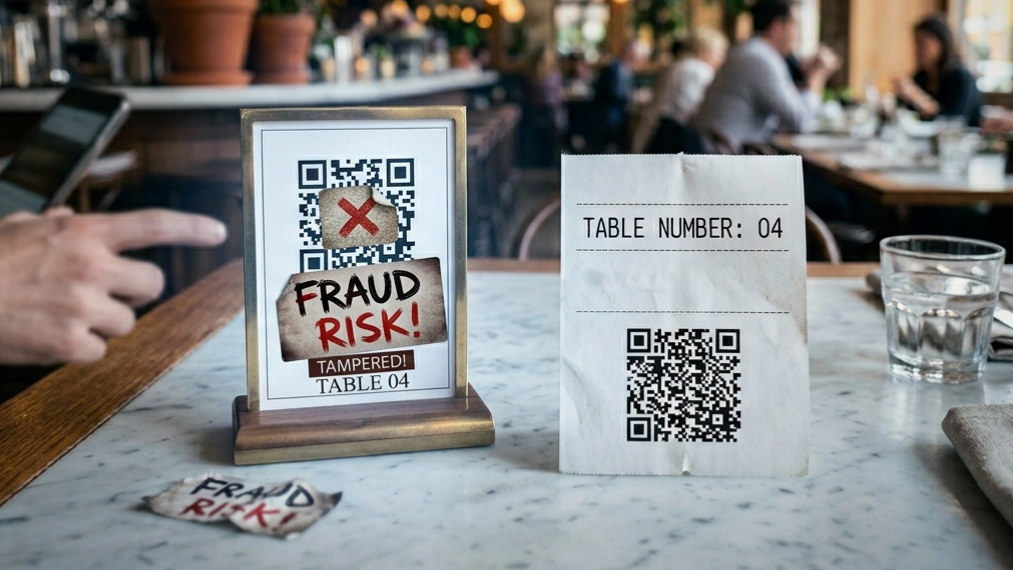
Walk into almost any restaurant in Kuala Lumpur, Penang, or Johor Bahru today and you'll find a QR code on the table. Scan it, browse the menu, place your order. It feels modern. It feels safe.
But there's a question most restaurant owners never ask: what kind of QR code is it? Because not all QR codes are created equal — and the difference between a static and a dynamic code could mean the difference between a seamless dining experience and a serious security incident that damages your brand for good.
Quick definition: A static QR code has its destination URL permanently encoded into the image. A dynamic QR code stores a short redirect URL in the image; the actual destination lives on a server and can be changed at any time without reprinting.
How QR Codes Actually Work — The Part Most People Skip
A QR code is just a machine-readable image that encodes a string of data — usually a URL. When your customer points their phone at it, the camera app decodes the image and opens that URL in a browser.
With a static QR code, the full destination URL is baked directly into the black-and-white pattern. Print it, laminate it, stick it on the table — and that URL is permanently frozen. You cannot change where it points without generating a brand new QR code image and reprinting every single piece.
With a dynamic QR code, the image only encodes a short tracking URL — something like qr.yourdomain.com/t8k2p. When scanned, the user's phone hits that short URL, which immediately redirects to whatever destination you've configured in your dashboard.
That single architectural difference has enormous implications for security, operations, and analytics — all of which matter deeply to running a profitable restaurant.
The Security Risk You're Probably Not Thinking About
Let's talk about the uncomfortable reality: static QR codes are trivially easy to tamper with.
All a bad actor needs to do is print a sticker containing their own malicious QR code and paste it over yours. Your customers scan what looks like your restaurant's code and get redirected to a fake payment page, a phishing site harvesting their credentials, or a malware download. You have zero visibility that this has happened. Your customers lose money or data. Your restaurant's reputation takes the hit.
This attack — often called "quishing" (QR phishing) — has been documented in restaurants, parking lots, and public spaces across Southeast Asia. It requires no technical sophistication. A printer and a roll of stickers is all it takes.
Real-world risk: In several reported incidents across Malaysia and Singapore, diners were redirected from tampered restaurant QR codes to convincing fake payment portals. By the time the restaurant owner discovered the swap, dozens of customers had already entered their banking credentials.
Why Dynamic QR Codes Neutralise This Attack
A dynamic QR code gives you server-side control. Here's why that matters for security:
- Instant redirect override: If you suspect tampering, you can change the destination for every code in your restaurant simultaneously — from your phone, in under a minute.
- Scan anomaly detection: Suspicious spikes in scan volume from an unusual table or time window are a red flag you can actually see and investigate.
- Domain trust: Dynamic codes point to your own verified domain. Customers who know to check the URL before proceeding have something legitimate to see.
- Expiry controls: Some dynamic QR systems let you set codes to expire and regenerate automatically, further limiting the window of any tampering.
With a static code, none of these defences exist. You are permanently blind to what happens after the scan.
The Operational Headaches That Add Up Fast
Security aside, static QR codes are simply expensive and slow for a business that changes as often as a restaurant does. Consider how frequently your menu actually changes.
Every time you add a seasonal dish, 86 an item that's sold out, change a price, or run a promotion — a restaurant using static QR codes must reprint and replace every table code. That's time, money, and the inevitable period where customers scan a code and see yesterday's menu.
With dynamic QR codes linked to a live digital menu system like ROVA, your update is live the moment you tap "Save." Every code in the restaurant points to the current, accurate menu automatically.
Side-by-Side: Static vs Dynamic QR for Restaurants
| Feature | Static QR Code | Dynamic QR Code |
|---|---|---|
| Menu updates without reprinting | ✗ Some possible | ✓ Instant |
| Protection against QR sticker swaps | ✗ None | ✓ Server-side override |
| Scan analytics (who, when, which table) | ✗ Zero visibility | ✓ Full dashboard |
| Redirect destination control | ✗ Permanent at print time | ✓ Change anytime |
| Run promotions via QR | ✗ Some requires reprint | ✓ Instantly in dashboard |
| Cost to update all table codes | ✗ Full reprint cost | ✓ RM 0 |
| Works with ordering system integration | ✗ Rarely | ✓ Native with ROVA |
The Analytics Opportunity You're Throwing Away
Beyond security and operations, dynamic QR codes unlock data that can genuinely improve your revenue — and static codes offer none of it.
Peak Scan Times
Know exactly when your diners are most actively browsing the menu. Schedule your upsell prompts — dessert specials, add-on drinks — to appear at the right moment.
Table-Level Insights
Which tables scan most? Which go untouched? This data helps you identify dead zones in your layout or tables that need better QR code placement.
Returning vs New Diners
Device fingerprinting through dynamic scan analytics can help identify repeat visitors, enabling loyalty flows and personalised recommendations.
Promotion Performance
Send different diners to different landing pages — A/B test your promotions and see which offer actually converts to an order.
None of this is possible with a static code. It scans, it opens a URL, and it disappears into silence. Dynamic QR codes turn every table into a data point.
Why This Matters Especially in Malaysia's F&B Market
Malaysia's restaurant industry has seen explosive adoption of QR ordering since 2020 — accelerated first by the pandemic, then by minimum wage increases driving restaurateurs toward self-service solutions. The result is that QR codes are now the primary customer touchpoint in thousands of outlets.
That widespread adoption is also why QR-based attacks are increasing. When a technology becomes ubiquitous and trusted, it becomes more attractive as a vector for fraud. Diners in Malaysia are now conditioned to scan first and think later — a habit that bad actors actively exploit.
Insight: The more your customers trust QR codes, the more important it becomes that you are in control of where those codes lead. Dynamic QR codes give you that control. Static codes do not.
There is also a regulatory dimension to consider. Under Malaysia's Personal Data Protection Act (PDPA), businesses that handle customer data have obligations around its security. If a tampered static QR code on your premises redirects your customers to a phishing page that harvests their data, questions about duty of care are not unreasonable — even if you didn't create the fake code yourself.
How to Switch: A Practical Guide for Restaurant Owners
Making the move from static to dynamic QR codes is far simpler than most restaurant owners expect. Here's the process when you use a platform like ROVA:
Set up your digital menu
ROVA will help to upload for FREE at starting. You also can upload your items, prices, categories, and photos to the ROVA dashboard for FREE. This becomes the live destination all your QR codes will point to.
Generate dynamic codes per table
ROVA generates a unique dynamic QR code for each table number. Each code tracks independently, giving you table-level analytics.
Print and place — once
Print your new codes. Use durable table stands, acrylic holders, or laminated cards. This is the last time you'll need to reprint for a menu change.
Update your menu digitally, forever
Sold out of nasi lemak? Mark it unavailable in 10 seconds. New weekend promotion? Schedule it to go live Friday at 6pm. No reprinting, ever.
Monitor your scan dashboard regularly
Check for anomalies — unexpected scan spikes, unusual times, or patterns that suggest code tampering. Act immediately if something looks wrong.
Addressing Common Objections
Restaurant owners sometimes push back on moving to dynamic QR codes. Here are the real answers to the most common concerns.
"My supplier already printed static codes for me — changing feels wasteful." — The reprint cost of moving to dynamic codes is a one-time expense. Compare that against one security incident, one irate customer, one viral complaint on Google Reviews, or even just one menu update cycle. Dynamic codes pay for themselves quickly.
"Isn't this overkill for a small restaurant?" — QR sticker swaps happen at small restaurants more often than large ones, precisely because smaller outlets are less likely to have security monitoring in place. Size is not a deterrent — it may actually make you a softer target.
"We don't need analytics — we just want people to see the menu." — That's completely valid. But dynamic codes still give you the ability to update that menu instantly and protect your customers from tampering. Even if you never look at the analytics dashboard, you are still more secure than with a static code.
Frequently Asked Questions
Yes. Anyone can print a sticker with a malicious QR code and place it over yours. Because a static QR code's destination is burned into the image itself, you have no server-side control to detect or block this. Dynamic QR codes let you monitor scan patterns and instantly redirect all codes to a safe URL if tampering is detected.
A static QR code encodes the destination URL directly into the image — it can never be changed after printing. A dynamic QR code encodes a short redirect URL; the actual destination is stored on a server and can be updated anytime without reprinting.
Dynamic QR codes typically come bundled with digital ordering platforms like ROVA. The cost is negligible compared to the savings from eliminating menu reprints, preventing security incidents, and gaining analytics that improve your upselling.
QR phishing (quishing) incidents have been reported across Malaysia, Singapore, and Southeast Asia, often targeting restaurants and retail outlets. Patrons are redirected to fake payment pages or credential-harvesting sites. Using dynamic QR codes with monitored destinations dramatically reduces this risk.
Absolutely. That is one of the primary benefits of dynamic QR codes. You update the menu in your dashboard and the change goes live instantly — every printed code in the restaurant automatically serves the new menu.
Protect Your Restaurant — Switch to Dynamic QR Today
ROVA's food ordering system comes with dynamic QR codes built in — with full scan analytics, instant menu updates, and zero reprinting. Set up takes less than a day.
Talk to ROVA