How Mamak Restaurants Can Benefit From a Digital Ordering System
Packed tables, late-night crowds, and orders shouted across the kitchen — mamak restaurants run on volume and speed. Here's how a digital ordering system fits right into that chaos and makes it more profitable.
ROVA Team
Updated June 2026
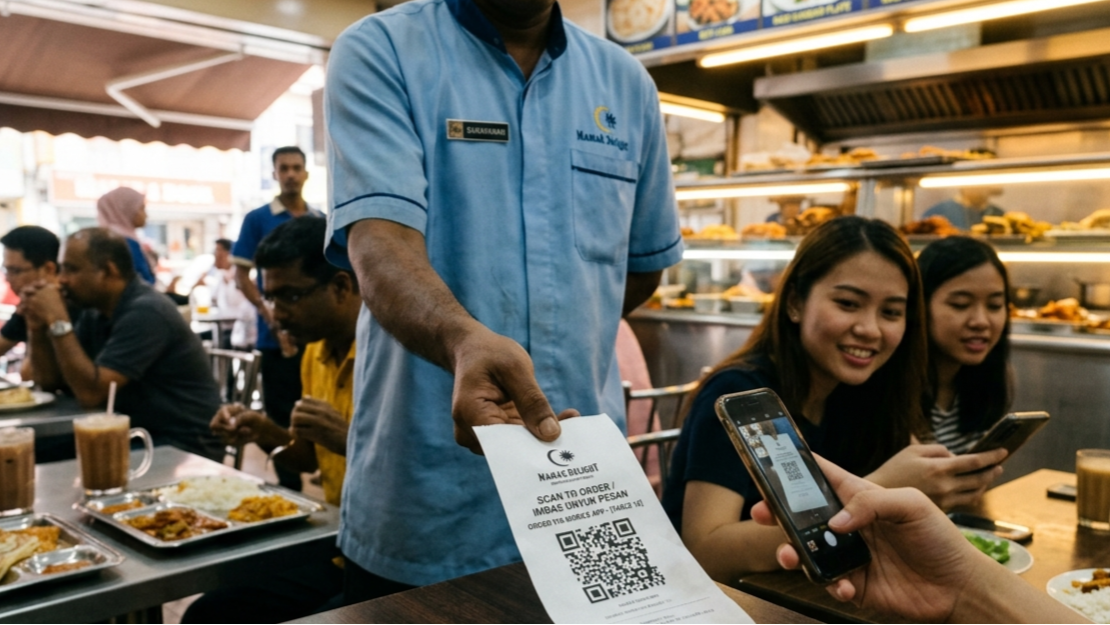
Walk into any mamak restaurant in Malaysia past 11pm and you'll see the same scene: every table full, runners weaving between chairs with trays of teh tarik, and a waiter scribbling an order on a small pad while three other tables try to flag him down at once. It's part of the charm — but it's also where money quietly slips away.
Missed add-ons, orders sent to the wrong table, customers who give up waving and just leave a smaller tip (or leave altogether) — these are the everyday costs of running one of the busiest, most order-dense formats in the local F&B scene without the right tools. A digital ordering system built for mamak-style volume changes that math, without changing what makes mamak restaurants mamak restaurants.
Why Mamak Restaurants Are a Different Beast
Mamak outlets aren't like a sit-down restaurant with two seatings a night. They run long hours, often 24 hours, with constant table turnover, large mixed groups, walk-in regulars, and a menu that spans roti, mee goreng, nasi kandar, and a long drinks list — all ordered separately, added to, and modified mid-meal. That combination of long hours, high table count, and frequent small add-on orders is exactly where manual order-taking breaks down the most.
- High covers per night. A single popular mamak can turn over hundreds of tables daily, multiplying any small inefficiency by volume.
- Constant add-on orders. "Tambah roti satu" and "kurang ais" happen all night, and each one is a chance for a verbal order to get lost or misheard.
- Large, noisy groups. Bigger tables mean more individual items per order, and more room for mix-ups when everything is handwritten.
- Thin staff-to-table ratios during peak hours. Waiters are stretched thin from 9pm to midnight, exactly when order accuracy matters most.
What a Digital Ordering System Actually Fixes
1. Faster Table Turnover
When customers can scan a QR code and order directly from their phone — or have a staff member input the order on a handheld device — there's no waiting for a waiter to be free. Orders go straight to the kitchen printer or display, cutting the lag between "ready to order" and "kitchen sees it." Faster turnover during peak hours means more tables served in the same window, without hiring more staff.
2. Fewer Order Errors, Fewer Free Replacements
Handwritten orders shouted over a noisy kitchen are a recipe for mistakes — wrong table, wrong spice level, missing "tambah" requests. A digital system captures the exact item, modifier, and table number every time, and routes it straight to the kitchen display. Fewer mistakes means fewer free remakes and fewer annoyed customers.
3. Easier Upselling Without Extra Staff Effort
A digital menu can quietly suggest the usual pairings — telur mata for the roti, an extra glass of teh tarik, a side of sambal — right at the point of ordering, the same way a sharp waiter would. Unlike a busy waiter mid-rush, the menu never forgets to ask.
4. Real Visibility Into What's Actually Selling
Paper order pads don't generate reports. A digital ordering system tracks every item sold, every hour, every day — making it obvious which dishes drive the most revenue, which times are truly peak, and where staffing should be adjusted. That's the kind of data most mamak operators are currently estimating by gut feel.
5. Smoother Handling of Big, Mixed Groups
Groups of eight or ten ordering separately is normal at a mamak. With table-based digital ordering, each person can add their own items to a shared table order, and the kitchen still receives one clean, consolidated ticket — no more piecing together who ordered what from memory.
The goal isn't to make a mamak feel like a fast-food kiosk. It's to keep the same energy and pace, just with fewer dropped orders and faster kitchen tickets.
Does It Fit the Mamak Culture?
One common worry: will customers — especially older regulars — feel like a digital system makes the place feel less "mamak"? In practice, the systems that work best for this format are designed to sit quietly in the background rather than replace the experience:
- Staff can still take orders the traditional way and key them in on a handheld device, keeping the personal touch for regulars who prefer it.
- QR ordering is offered as an option at the table, not forced — customers who'd rather call a waiter still can.
- The kitchen workflow stays familiar; the system just replaces the paper ticket with a clearer, faster digital one.
What to Look for in a Digital Ordering System for a Mamak Restaurant
- Handles high order volume without lag. The system needs to keep up during 10pm rushes, not just quiet afternoons.
- Supports both QR self-ordering and staff-assisted ordering on the same backend, so the restaurant can mix both depending on the table.
- Fast kitchen display or printer integration so tickets reach the kitchen the moment an order is placed.
- Simple modifier handling for common mamak requests — kurang ais, tambah sambal, less spicy — without extra taps.
- Built-in sales reporting to track best-sellers, peak hours, and average order value over time.
- Works reliably on local Wi-Fi and mobile data, since mamak outlets are often open-air with patchy connectivity.
The Bottom Line
Mamak restaurants don't need to become something else to benefit from a digital ordering system — they need a system that's built to handle exactly the kind of chaos a mamak runs on: long hours, big groups, constant add-ons, and a kitchen that never really stops. Done right, the technology disappears into the background, and all that's left is faster tables, fewer mistakes, and a clearer picture of the business.
Running a mamak or 24-hour outlet?
ROVA's food ordering system is built for high-volume Malaysian F&B — QR ordering, staff-assisted ordering, and kitchen display, all in one.